

VelOS-DC
VelOS DC is a data centre network operating system built from the ground up on Linux -- not layered on top of it. It integrates natively with compute environments, automation frameworks, and AI/GPU cluster fabrics, delivering hyperscaler-grade networking on whitebox hardware -- with seamless integration into existing infrastructure through open standards.
Download Brochure

Key benefits
What Makes VelOS-DC Powerful
VelOS-DC is a Linux-native network operating system built for modern data centres, where performance and reliability are critical. It enables seamless use of standard tools like Ansible and systemd, simplifying automation. Running on NeoX switches with Broadcom silicon, it offers hardware flexibility, scalability, and high-performance networking without vendor lock-in.

Scalable Fabric Architecture
VelOS DC supports leaf-spine fabric architectures that scale from small data centres to hyperscaler-grade deployments. The hardware ecosystem spans Broadcom Trident 3 silicon for cost-effective leaf switches through to Tomahawk 4 silicon for ultra-high-bandwidth spine switches, enabling operators to build fabrics that grow with their infrastructure without changing their NOS.

Compute-Native Integration
Linux-native means every tool a Linux engineer knows -- Ansible, Puppet, systemd, cron, shell scripts -- works natively on VelOS DC. There is no proprietary CLI translation layer between intent and execution. Network switches operate as standard Linux hosts, integrating seamlessly into compute-centric operational workflows and automation pipelines.

Open Architecture, Zero Lock-In
VelOS DC runs on NeoX DC switches and other whitebox platforms built on industry-standard Broadcom silicon. Standard protocols, standard interfaces, and standard automation frameworks mean operators retain full hardware choice and avoid proprietary dependencies that limit future flexibility. Choose your hardware, keep your options open.

AI-Ready Performance
RDMA over Converged Ethernet version 2 (RoCEv2) and lossless Ethernet are production features shipping today -- not roadmap items. GPU clusters and AI training workloads get the low-latency, lossless fabric they need now, on open hardware, with full integration into existing data centre automation and monitoring workflows.
VelOS DC Architecture
The VelOS DC architecture diagram illustrates the separation of control plane, data plane, and management plane within a Linux-native network operating system. The Linux kernel serves as the foundation, with a hardware abstraction layer providing uniform access to Broadcom switching silicon. The protocol stack, automation interfaces, and streaming telemetry services operate as standard Linux processes, enabling native integration with compute-environment toolchains.
LINUX-NATIVE NOS
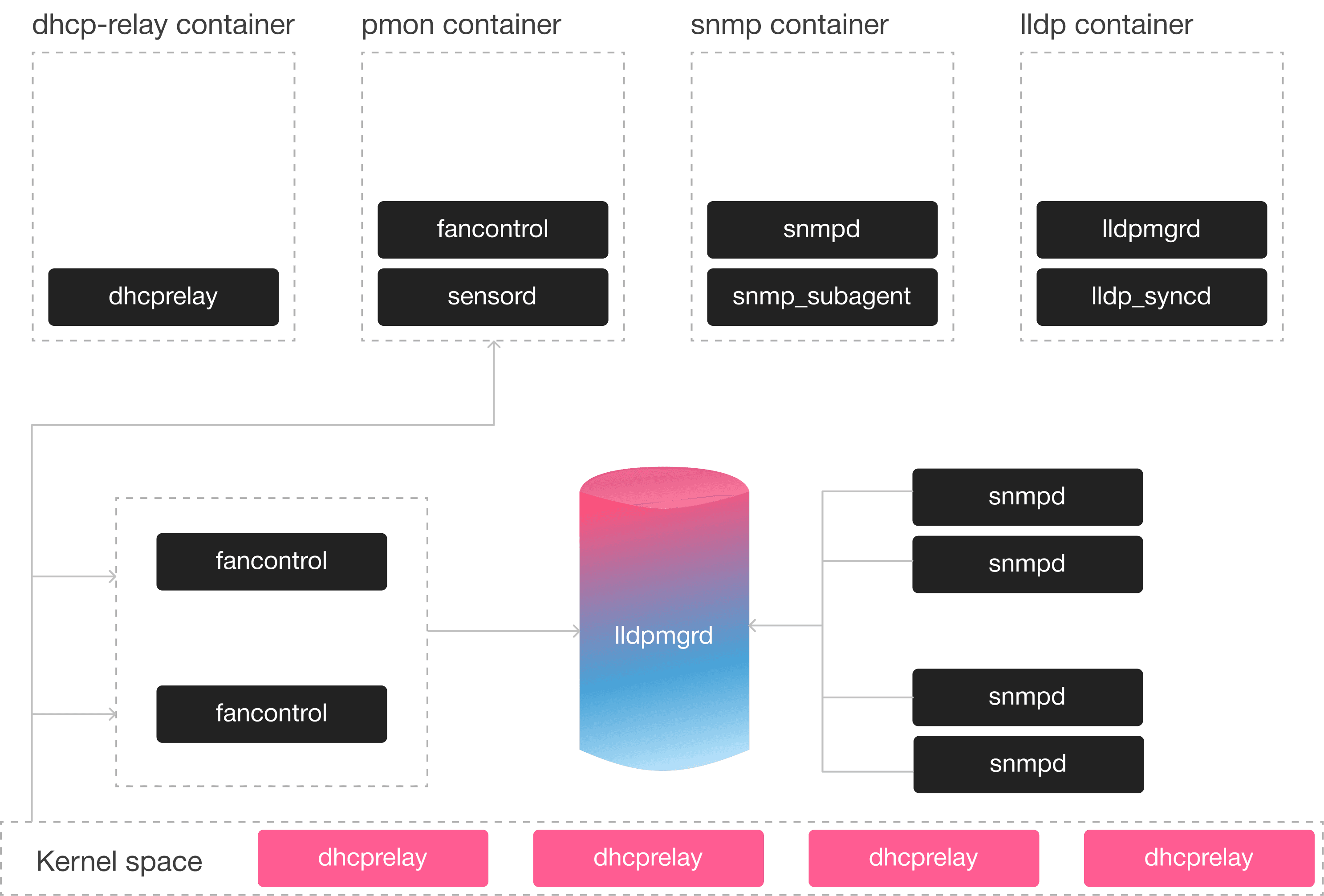
Linux kernel as source of truth
Network state lives in the kernel, not in a proprietary database. Standard Linux networking commands (ip, bridge, tc) interact with the network directly.
Hardware abstraction layer
Supports Broadcom Trident 3 through Tomahawk 4 switching silicon, providing a consistent operational experience across the full range of NeoX DC switches.
Native Linux tool integration
Standard Linux networking tools work out of the box. No proprietary CLI required for day-to-day operations.
Full protocol stack
Border Gateway Protocol (BGP), Open Shortest Path First (OSPF), and Ethernet Virtual Private Network (EVPN) with Virtual Extensible LAN (VXLAN) overlay for scalable data centre fabrics.
Streaming telemetry
Real-time network state exported via gRPC Network Management Interface (gNMI) for integration with modern monitoring and observability platforms.
Programmable data plane
Hardware-accelerated forwarding with support for custom filtering, Quality of Service (QoS), and Access Control List (ACL) policies.
AI NETWORKING CAPABILITIES
Built for AI/GPU Cluster Fabrics
he following capabilities are production features shipping today on VelOS DC -- not roadmap items. Operators deploying GPU clusters and AI training infrastructure can qualify VelOS DC for their lossless fabric requirements now.

RDMA over Converged Ethernet v2 (RoCEv2)
RoCEv2 enables GPU-to-GPU communication with minimal latency and near-zero CPU overhead. In distributed AI training environments, thousands of GPUs must synchronise gradients across the fabric after every training iteration. RoCEv2 bypasses the traditional TCP/IP stack, delivering the consistent low-latency performance that large-scale AI workloads demand.
Lossless Ethernet (Priority Flow Control / Explicit Congestion Notification)
Priority Flow Control (PFC) prevents packet drops on priority traffic classes by sending pause frames to upstream devices when buffer thresholds are reached. Explicit Congestion Notification (ECN) signals congestion to endpoints before drops occur, enabling proactive rate adjustment. Together, PFC and ECN create the lossless Ethernet fabric that RDMA workloads require -- ensuring that every packet reaches its destination without retransmission.
Data Centre Quantised Congestion Notification (DCQCN)
DCQCN is an end-to-end congestion control protocol that combines ECN signalling with fine-grained rate adjustment at the source. It prevents congestion hotspots in large-scale AI training clusters by dynamically throttling senders before queue depths trigger PFC pause frames. DCQCN is essential for maintaining consistent fabric performance across hundreds or thousands of GPU nodes operating in parallel.
PROTOCOL AND FEATURE DEPTH
VelOS DC supports a comprehensive set of data centre networking protocols, automation interfaces, and monitoring tools.
| Category | Protocols and Standards |
|---|---|
| Category Layer 2 | Protocols and Standards Spanning Tree Protocol (STP), Rapid STP (RSTP), Multiple STP (MSTP), Link Layer Discovery Protocol (LLDP), Link Aggregation (LAG/LACP), Virtual LAN (VLAN) |
| Category Layer 3 | Protocols and Standards Border Gateway Protocol (BGP), Open Shortest Path First (OSPF), static routes, Equal-Cost Multi-Path (ECMP), Virtual Routing and Forwarding (VRF) |
| Category Overlay | Protocols and Standards Virtual Extensible LAN (VXLAN), Ethernet Virtual Private Network (EVPN) |
| Category Automation | Protocols and Standards Ansible, Terraform, Python, REST API, gRPC Network Management Interface (gNMI), Network Configuration Protocol (NETCONF |
| Category Monitoring | Protocols and Standards sFlow, Simple Network Management Protocol (SNMP), syslog, gNMI streaming telemetry |
Related Products
What VelOS-DC Brings to Your Network
| Product Type | Ports Supported | Chipset | ||
|---|---|---|---|---|
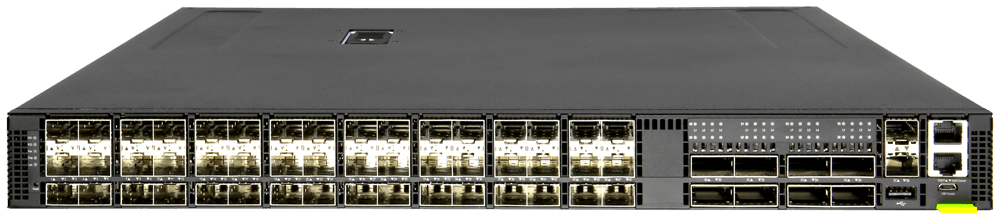 | NeoX NS7326-56X | 48x 25G SFP28 + 8x 100G QSFP28 | Broadcom Trident 3 | Download pdf |
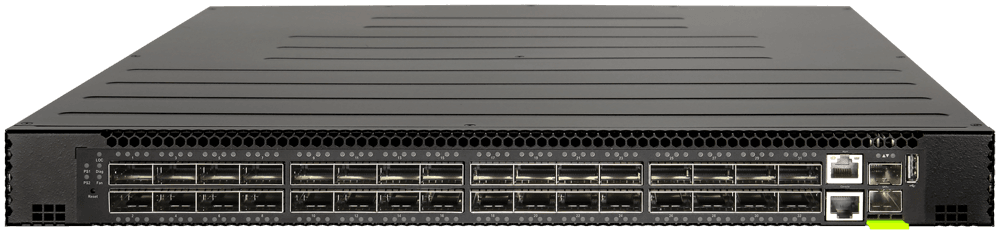 | NeoX NS7726-32X | 32x 100G QSFP28 + 2x 10G SFP+ | Broadcom Trident 3 | |
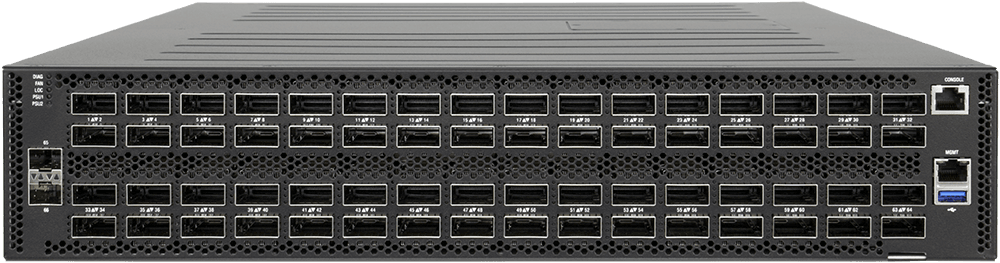 | NeoX NS9736-64D | 64x 400G QSFP56-DD | Broadcom Tomahawk 4 | |
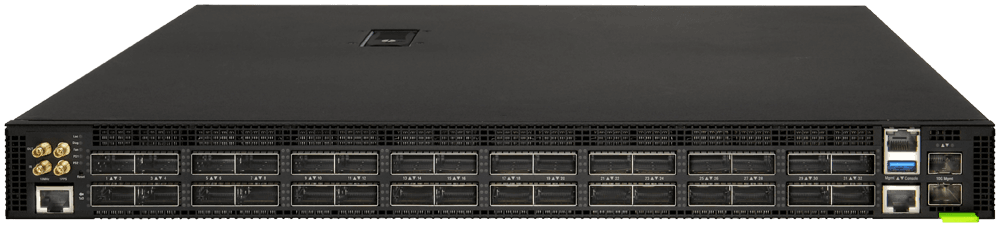 | NeoX NS9716-32D | 32x 400G QSFP-DD | Broadcom Tomahawk 3 |

OTHER PRODUCTS
Explore the VelOS portfolio


Frequently asked questions

Contact
Location: United Arab Emirates, Dubai,Dubai Internet City, DIC-Bldg.05-118, Evollabs Tech FZ-LLC
© EVOLLABS, all rights reserved.
Developed by SpiderWorks.